Product Introduction
The device utilizes advanced dynamic impedance control technology, integrating multiple functions into a single unit to deliver seven training modes: isokinetic, isometric, isotonic, continuous passive motion (CPM), progressive continuous passive motion, elastic resistance, and proprioceptive training. It facilitates rehabilitation exercises for six major joints—shoulder, elbow, wrist, hip, knee, and ankle—covering 22 distinct movements. Rehabilitation is achieved through quantitative functional assessment, interactive virtual scenario training, and comparative analysis of movement data. Its innovative mobile isokinetic design offers a wide range of clinical applications. Intelligent assessment and training capabilities, combined with a streamlined workflow and superior performance, significantly enhance muscle strength recovery.
Functional Features
Dynamic Testing and Training:
1) Offers seven training modes—isokinetic, isometric, isotonic, CPM, progressive CPM, elastic resistance, and proprioceptive training—providing a “one-stop,” full-cycle service for musculoskeletal rehabilitation.
2) A bedside isokinetic rehabilitation robot; its mobile design overcomes space limitations, making it suitable for various settings. Compact and portable, it allows for bedside use, facilitating early-stage rehabilitation.
3) Suitable for all stages of neurological rehabilitation (early, intermediate, and late stages).
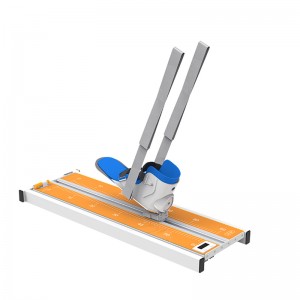
4) Equipped with 12 joint-specific attachments—including those for the shoulder, elbow/shoulder, hip, knee/hip, ankle, and a steering wheel attachment—enabling over 20 types of movements across the six major joints.
5) Features a world-class power head design that truly enables early-stage rehabilitation; the output shaft offers a minimum angular velocity of 0.05°/s with 1% precision, ensuring highly accurate assessment and training.
6) Offers continuously adjustable speed and torque. Capable of targeting six major joints, it allows for the simultaneous training of agonist and antagonist muscles, maximizing training effectiveness and meeting requirements for comprehensive assessment and training.
7) Equipped with an IoT interface to enable the synchronized integration of assessment and training data.